


As we move further into 2026, global events continue to remind us just how interconnected the world’s energy markets truly are. Conflicts in key regions have once again placed pressure on oil supply chains, sending crude prices sharply upward and creating ripple effects across economies worldwide. For South African businesses, these shifts are not just headlines—they translate directly into operational costs, logistics planning, and financial forecasting.
At Eco Diesel, we understand that fuel is more than a commodity. It is the lifeblood of industries that keep our country moving—transport, agriculture, construction, mining, and manufacturing. When international instability drives oil prices higher, the impact reaches every corner of the supply chain.
Our focus during these periods of volatility is simple: reliability, transparency, and partnership. We remain committed to sourcing quality fuel, maintaining consistent supply, and providing our customers with the insights they need to make informed decisions in a rapidly changing market.
While the global landscape may shift quickly, our dedication to service and dependable delivery does not. Businesses succeed when they can rely on their energy partners, and that is the role Eco Diesel continues to play.
Thank you for your continued trust and partnership.

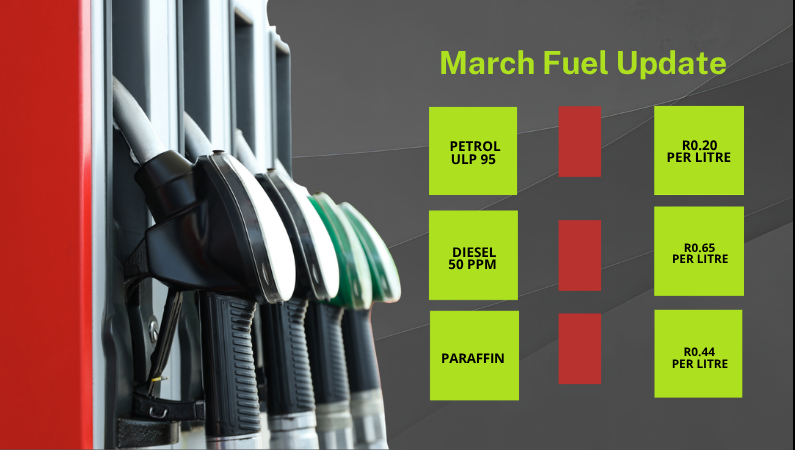
Fuel Price Storm Ahead: Could South Africa Face an R8-Per-Litre Petrol Shock?
South Africa’s fuel market could be heading toward a significant price shock as rising global oil prices and a weakening rand place increasing pressure on local fuel costs. Because the country imports most of its crude oil, fluctuations in international oil prices and exchange rates have a direct impact on what motorists and businesses ultimately pay at the pump. Recent geopolitical tensions in key oil-producing regions have already pushed crude prices higher, creating uncertainty across global energy markets.
One of the major concerns driving volatility is the Strait of Hormuz, a vital shipping route through which roughly 20% of the world’s oil supply passes. Any escalation of conflict or disruption to shipping in this narrow channel can quickly send global oil prices upward as markets anticipate possible supply shortages. Even the threat of disruption can trigger price spikes as traders factor in potential risks.
For South African industries such as transport, logistics, agriculture and construction, rising diesel prices translate directly into higher operational costs. Fuel represents a significant portion of operating expenses, meaning sudden price increases can affect budgets, pricing structures and supply chains. With potential fuel levy adjustments also expected in the coming months, businesses that rely on bulk fuel will need to monitor market developments closely and plan procurement strategies carefully to maintain stability in an increasingly volatile environment.
Global Conflict, Local Consequences: Why Oil Prices Are Surging
Across the world, geopolitical tensions continue to place enormous pressure on global energy markets. Conflicts in key oil-producing and transit regions have disrupted supply routes, increased market uncertainty, and pushed crude oil prices sharply upward. While these events may seem distant, the impact is felt directly in South Africa’s fuel market.
Oil is one of the most globally traded commodities. When supply risks increase—even temporarily—markets react quickly. Traders factor in the potential for shortages, shipping disruptions, or sanctions, which drives prices upward long before physical shortages occur.
For South African businesses, this volatility creates several immediate challenges.
Firstly, higher crude oil prices increase the base cost of refined fuel products such as diesel. Secondly, currency fluctuations often amplify the effect. When the rand weakens against the US dollar during global instability, the cost of imported fuel rises further.
Industries that rely heavily on diesel feel the pressure first. Transport and logistics companies face rising operating costs as fleet fuel expenses climb. Agricultural producers depend on diesel for irrigation, harvesting, and machinery. Construction and mining operations require large volumes of fuel to keep projects moving.
The ripple effect eventually reaches consumers as increased transport and production costs influence the price of goods and services.
However, periods like these also highlight the importance of efficient fuel management. Businesses that plan ahead, monitor market trends, and partner with reliable fuel suppliers are better positioned to navigate volatility.
While global conflicts are beyond local control, strategic fuel planning helps South African businesses remain resilient in an unpredictable energy landscape.
Fuel Smart, Operate Strong: Practical Ways to Reduce Diesel Costs
With global energy markets remaining volatile, diesel prices continue to fluctuate, placing pressure on operating budgets across many industries. For South African businesses that rely heavily on fuel—from transport fleets to construction sites and farms—managing diesel consumption efficiently has become more important than ever.
While companies cannot control global oil prices, they can take practical steps to improve fuel efficiency and reduce unnecessary costs.
Plan fuel purchases strategically
Monitoring market trends and purchasing fuel in bulk when prices are more stable can help businesses reduce exposure to sudden price spikes.
Maintain storage tanks properly
Clean and well-maintained storage tanks help protect diesel quality. Contaminated fuel can lead to engine damage, poor performance, and costly downtime.
Track fuel usage carefully
Keeping accurate records of fuel consumption helps identify inefficiencies, unusual usage patterns, or potential losses. This allows businesses to adjust operations and improve fuel control.
Service vehicles and equipment regularly
Engines that are poorly maintained tend to burn more fuel. Routine servicing, proper tyre pressure, and regular engine checks can significantly improve fuel efficiency.
Reduce unnecessary idling
Idling vehicles consume fuel without producing work. Encouraging operators and drivers to minimise idle time can lead to noticeable fuel savings over time.
Partner with a reliable fuel supplier
Working with a trusted bulk fuel provider ensures consistent fuel quality and dependable deliveries, helping businesses avoid operational disruptions.
In a challenging economic environment, smart fuel management is one of the most effective ways businesses can control costs and keep operations running efficiently.
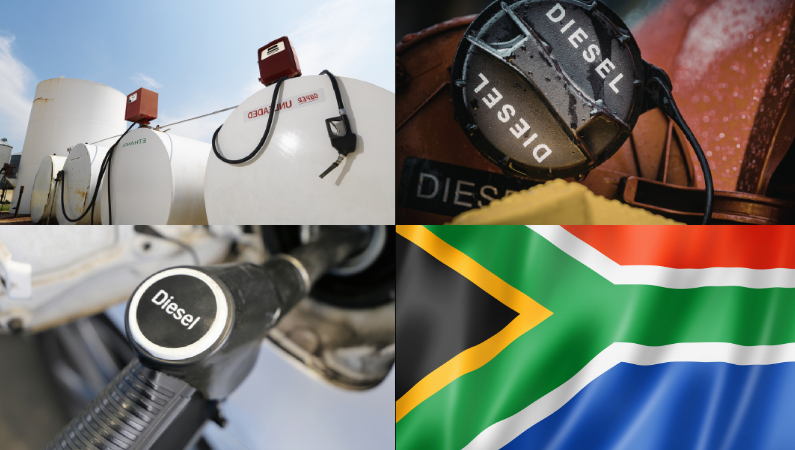
Powering Through Pressure: Why Diesel Remains the Backbone of South Africa’s Economy
South Africa’s economy continues to operate in a challenging environment shaped by infrastructure strain, electricity instability, and rising operating costs. Despite ongoing improvements in power supply, many businesses still rely heavily on diesel to ensure continuity and productivity.
Across industries, diesel remains a critical safeguard against operational disruption. From backup generators in office parks and hospitals to heavy machinery in construction, agriculture, and mining, diesel plays a vital role in keeping businesses running when grid reliability becomes uncertain.
Recent local news continues to highlight the fragile balance within South Africa’s energy system. While progress has been made in stabilising electricity supply, unexpected outages, infrastructure maintenance, and seasonal demand spikes still create pressure on the grid. For many companies, having reliable diesel supply is not just a convenience—it is a business continuity strategy.
Transport and logistics companies are also navigating increasing demand across supply chains. With goods moving constantly across the country, fleet efficiency and dependable fuel supply are essential to keeping deliveries on schedule and maintaining customer expectations.
In agriculture, diesel powers irrigation systems, tractors, and harvesting equipment—particularly important as farmers prepare for seasonal production cycles. Construction and mining operations similarly rely on consistent fuel supply to maintain productivity and meet project timelines.
In this environment, fuel planning has become more important than ever. Businesses that secure reliable bulk fuel supply, manage storage efficiently, and monitor consumption patterns are better positioned to control costs and avoid operational interruptions.
As South Africa’s industries continue to adapt to evolving energy realities, diesel remains one of the most dependable resources keeping the economy moving forward.
From Oil Fields to Fuel Tanks: How Global Energy Shocks Reach South Africa
When oil prices spike on international markets, the effects travel quickly through the global supply chain—eventually reaching fuel pumps, bulk fuel depots, and diesel tanks across South Africa.
Understanding how this process works helps businesses better prepare for price fluctuations.
Crude oil is priced internationally, typically in US dollars. When geopolitical conflict threatens supply from major producing regions, global markets respond with price increases. Refineries then pay more for crude, which raises the cost of producing diesel and other fuel products.
South Africa imports a significant portion of its refined fuel and crude oil requirements. This makes the country particularly sensitive to global price movements. Even small shifts in international oil prices can have a noticeable impact on local fuel costs.
There are several factors that determine how these global events translate into local fuel prices:
Global supply risk
Conflict in oil-producing regions raises concerns about production interruptions or blocked shipping routes.
Currency movements
A weaker rand against the US dollar increases the cost of importing fuel.
Shipping and insurance costs
War zones and geopolitical instability increase transportation risk premiums.
Market speculation
Energy traders often react quickly to uncertainty, which can amplify price movements.
For South African industries that rely on diesel, rising fuel volatility creates a challenging operating environment. Businesses must adapt to shifting costs while maintaining productivity, making proactive fuel management essential. By monitoring market trends, securing reliable supply channels, and planning ahead, companies can maintain stability and keep operations running efficiently despite global disruptions.