


As we move through May, South Africa’s fuel industry continues to face significant pressure from global uncertainty, rising oil prices, and ongoing geopolitical instability. International conflict in the Middle East, combined with supply chain disruptions and exchange rate volatility, has once again placed fuel costs under strain, with diesel prices seeing some of the sharpest increases in recent years.
Despite these challenges, the South African economy has shown encouraging signs of resilience, with improved private sector activity and stronger business confidence emerging in recent months. Businesses across logistics, mining, agriculture, manufacturing, and transport are now focusing more than ever on operational efficiency, fuel planning, and supplier reliability to manage rising costs.
At Eco Diesel, we understand the critical role that dependable fuel supply plays in keeping industries moving. Our commitment remains firmly focused on delivering quality-tested fuel products, reliable nationwide delivery, and responsive customer service that helps our clients maintain operational continuity during uncertain market conditions.
We continue working closely with businesses across South Africa to provide flexible fuel solutions, strategic support, and transparency in an increasingly complex environment. As the industry evolves, our priority remains simple: helping our customers operate with confidence, stability, and peace of mind.
Thank you for your continued support and partnership.
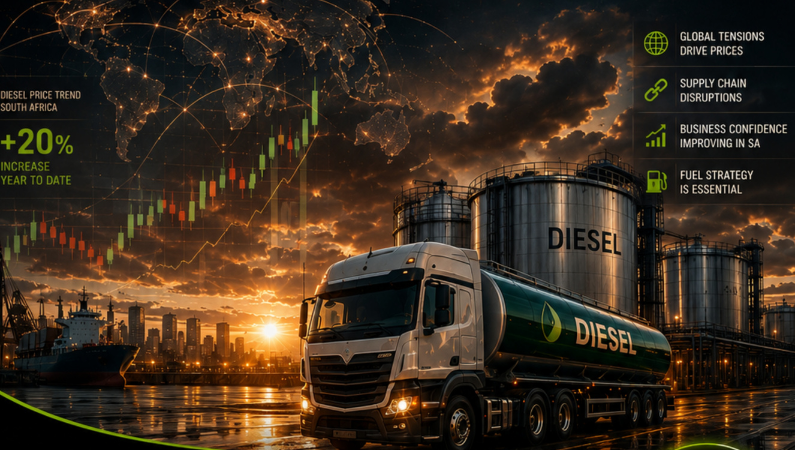
Diesel Price Pressures Continue To Impact South African Industries
Why Fuel Strategy Has Become a Business Priority
South African businesses are once again facing intense pressure as diesel prices rise sharply following ongoing global oil market instability. Recent international tensions and disruptions to global energy supply chains have pushed crude oil prices significantly higher, creating major cost implications for fuel-importing economies like South Africa.
For industries heavily dependent on diesel — including logistics, agriculture, mining, construction, manufacturing, and transport — the impact is immediate. Rising fuel costs affect everything from operational expenses and freight pricing to project timelines and profitability.
Many businesses are now realising that reactive fuel management is no longer sustainable. Strategic fuel planning has become essential to protect operations from ongoing volatility.
Key areas businesses are now prioritising:
- Improving fuel consumption monitoring and forecasting
- Optimising fleet efficiency and route planning
- Investing in preventative vehicle maintenance
- Exploring secure on-site fuel storage solutions
- Working with trusted suppliers that can ensure consistent delivery
- Reducing unnecessary fuel waste across operations
- Improving operational planning during peak demand periods
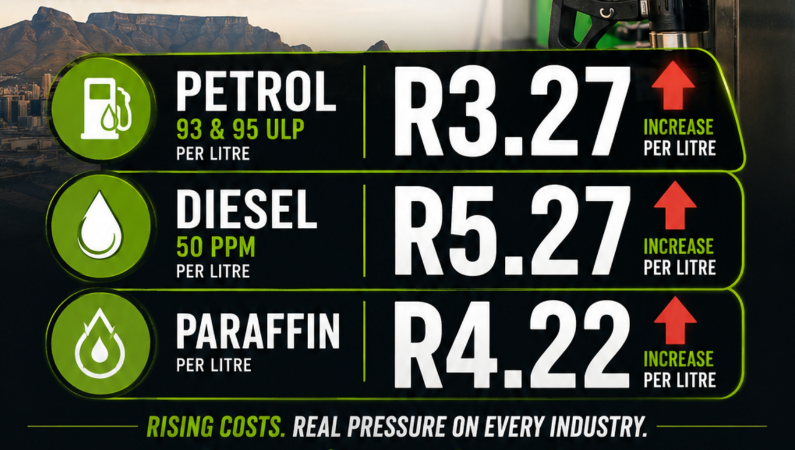
Recent market data indicates that diesel prices experienced one of the largest increases seen in years during May, placing additional pressure on transport and production sectors.
Businesses that adapt quickly and implement stronger fuel management strategies are likely to remain more resilient during future market disruptions.
At Eco Diesel, we continue supporting our customers with dependable fuel supply, quality assurance, and responsive service designed to help businesses navigate uncertain conditions while maintaining operational continuity across South Africa.
Fuel Quality Remains Critical For Equipment Performance
Protecting Fleets During High-Cost Operating Conditions
As diesel prices continue climbing, businesses cannot afford unnecessary equipment downtime, poor engine performance, or increased maintenance costs caused by low-quality fuel.
Fuel quality plays a critical role in protecting modern engines, improving fuel efficiency, and extending the lifespan of fleet vehicles and machinery. Contaminated or poor-quality diesel can lead to injector damage, blocked filters, excessive emissions, and costly operational disruptions. Industries operating heavy-duty fleets, generators, agricultural equipment, and construction machinery are particularly vulnerable when fuel standards are compromised.
Key benefits of quality fuel management include:
- Improved engine performance
- Reduced maintenance costs
- Better fuel economy
- Lower risk of breakdowns
- Extended equipment lifespan
- Improved operational reliability
With businesses already facing increased operating expenses due to rising fuel prices, preventative maintenance and quality fuel sourcing have become essential business priorities.
At Eco Diesel, we remain committed to supplying quality-tested fuel products backed by reliable service and customer support to help our clients protect their operations and maximise efficiency.

Diesel Refunds Bring Relief To Mining, Farming & Forestry
What Businesses Need to Know About SARS’ New Changes
In a welcome development for large diesel users, the South African Revenue Service (SARS) has announced significant changes to the Diesel Refund Scheme that could provide meaningful financial relief to qualifying industries.
Effective from 1 April 2026, eligible onland diesel users within the farming, forestry, and mining sectors will now be able to claim back 100% of qualifying diesel usage — up from the previous 80% allowance. This adjustment forms part of government’s broader efforts to support industries heavily affected by rising fuel costs and increased operational pressure.
The updated refund structure comes at a critical time, particularly as businesses battle record-high diesel prices and mounting logistics expenses. The refund adjustment is expected to provide some breathing room for sectors that rely heavily on diesel-powered machinery and transportation.
Industries that may qualify:
- Mining operations
- Agricultural producers
- Forestry businesses
- Contractors supporting qualifying activities
Important compliance requirements:
- Claims must be submitted within two years of diesel purchase
- Accurate diesel usage logbooks must be maintained
- Businesses must separate eligible and non-eligible diesel usage
- Documentation must be retained for at least five years
- Incorrect claims may result in penalties and interest
SARS has also continued its digital modernisation process, introducing improved systems designed to streamline refund applications and reduce fraud risks.
Tips for businesses:
- Review your diesel usage tracking systems
- Ensure accurate fuel records are maintained daily
- Consult with tax professionals regarding eligibility
- Work with fuel suppliers that provide detailed reporting and invoicing
For many businesses, effective fuel management and refund optimisation could make a significant difference in managing operational costs during the current fuel crisis.

South Africa’s fuel industry is entering a new era shaped by global uncertainty, economic pressure, and evolving energy demands. While fuel price volatility is expected to remain a major challenge throughout 2026, businesses are also becoming more strategic, resilient, and operationally focused.
Government intervention through temporary fuel levy relief has provided some short-term support to consumers and businesses facing steep fuel price increases. However, long-term market pressures linked to global oil supply, exchange rate fluctuations, and geopolitical instability are likely to continue influencing local fuel pricing.
At the same time, South Africa is seeing growing interest in cleaner technologies, fuel efficiency improvements, and smarter energy management solutions across multiple industries.
Businesses that remain proactive, adaptable, and operationally efficient will be better positioned to navigate the changing market landscape.
Eco Diesel remains committed to supporting businesses through these challenges by delivering dependable fuel supply, quality products, and professional service designed to help customers operate with confidence in an increasingly complex environment.