


Steering Forward Together in a Demanding Year
Message from the CEO
As we move into February, the year is already reminding us that resilience, adaptability, and partnership are no longer optional in South Africa’s fuel-dependent industries, they are essential. From logistics and agriculture to construction and manufacturing, businesses are navigating tight margins, operational pressure, and ongoing infrastructure uncertainty. At Eco Diesel, we see these challenges up close every day, and we take our role in your operation seriously.
Fuel is not just a commodity; it’s a critical input that determines uptime, productivity, and cost control. That’s why our focus remains firmly on reliability, quality assurance, and transparent service, not quick wins or short-term promises. February is traditionally a high-activity month as businesses regain momentum after the festive season, and the last thing any operation needs is inconsistent supply or compromised product quality.
This year, we are placing renewed emphasis on proactive communication, smarter delivery planning, and continuous improvement across our supply chain. We are also strengthening relationships with customers to better understand usage patterns, seasonal demand, and operational pain points. The goal is simple: fewer surprises and better predictability for your business.
As the months ahead unfold, our commitment is to remain a dependable partner, one that understands the realities on the ground and responds with practical solutions. Thank you for trusting Eco Diesel to keep your operations moving. We look forward to another year of working closely together, growing stronger through collaboration and shared accountability.
February Pressure Points: Why This Month Tests Fuel Operations
Understanding the realities behind early-year fuel demand
February often flies under the radar, yet it is one of the most operationally demanding months for fuel-reliant businesses in South Africa. With the festive slowdown behind us, fleets return to full capacity, construction schedules accelerate, and agricultural operations move into critical cycles. This sudden surge in activity exposes weak points in fuel planning and supply strategies.
One of the biggest February challenges is underestimated demand. Many businesses base their fuel forecasts on January usage, which is typically lower due to shutdowns and reduced trading hours. When operations ramp up quickly, this mismatch can lead to rushed orders, emergency deliveries, and increased risk of stockouts — all of which drive up costs.
Weather also plays a role. Late summer heat affects storage conditions, increases evaporation losses if tanks are poorly maintained, and places extra strain on generators during load-shedding or grid instability. Add congested transport routes and rising operational costs, and February becomes a stress test for fuel logistics.
To reduce pressure during this period, businesses should:
- Review fuel consumption trends from previous Februarys
- Confirm on-site storage capacity and tank condition
- Align delivery schedules with operational peaks
- Avoid last-minute orders that disrupt supply planning
Fuel efficiency in February is not about cutting corners — it’s about anticipating demand and working with a supplier who understands seasonal realities. The right planning now prevents costly disruptions later in the year.
Heat, Storage & Diesel Quality: What Summer Really Does to Fuel
Why February conditions demand extra attention
South African summers place unique stress on diesel storage and handling, and February is often when issues begin to surface. High ambient temperatures, combined with increased turnover, can accelerate fuel degradation if storage systems are not properly managed. This is particularly relevant for operations running generators, heavy machinery, or backup power systems continuously.
Heat itself does not “damage” diesel, but it can amplify existing problems. Condensation inside tanks increases with temperature fluctuations, introducing water that encourages microbial growth. These microbes form sludge and acids that clog filters, corrode tanks, and reduce fuel efficiency. The result is unexpected downtime — often blamed on equipment rather than fuel quality.
Key summer storage risks include:
- Poor tank ventilation leading to moisture build-up
- Infrequent tank inspections during busy periods
- Old fuel remaining stagnant in low-turnover tanks
- Inadequate filtration at point of use
February is an ideal time to assess fuel hygiene before problems escalate. Simple preventative steps such as tank inspections, water drainage, and filter checks can extend fuel life and protect engines. Businesses that treat fuel as an asset — not just a consumable — consistently see better performance and lower maintenance costs. At Eco Diesel, we encourage customers to have open conversations about storage conditions and usage patterns. Fuel quality doesn’t stop at delivery; it’s a shared responsibility that directly impacts operational reliability.

Generator Reality Check: Are You Ready for Unplanned Downtime?
Lessons from recent grid instability
Despite improvements in energy availability, February 2026 has once again highlighted how quickly grid reliability can shift. Many businesses assume their backup systems are ready — until they are tested under sustained load. Generator failures are rarely caused by the machine itself; more often, the issue lies with fuel quality, storage practices, or lack of routine testing.
Generators that ran intermittently in December and January may now be operating for longer periods, revealing hidden problems such as blocked filters, water contamination, or insufficient fuel reserves. When downtime hits during peak trading hours, the financial impact is immediate.
A practical generator readiness checklist includes:
- Testing generators under real load conditions
- Checking diesel for water and sediment
- Confirming sufficient fuel on site for extended outages
- Reviewing service intervals and maintenance logs
February is not the time to discover weaknesses in your backup strategy. Businesses that proactively test and maintain their systems are far better positioned to absorb disruption without operational loss. Fuel reliability plays a central role in energy resilience — and it starts long before the generator is switched on.
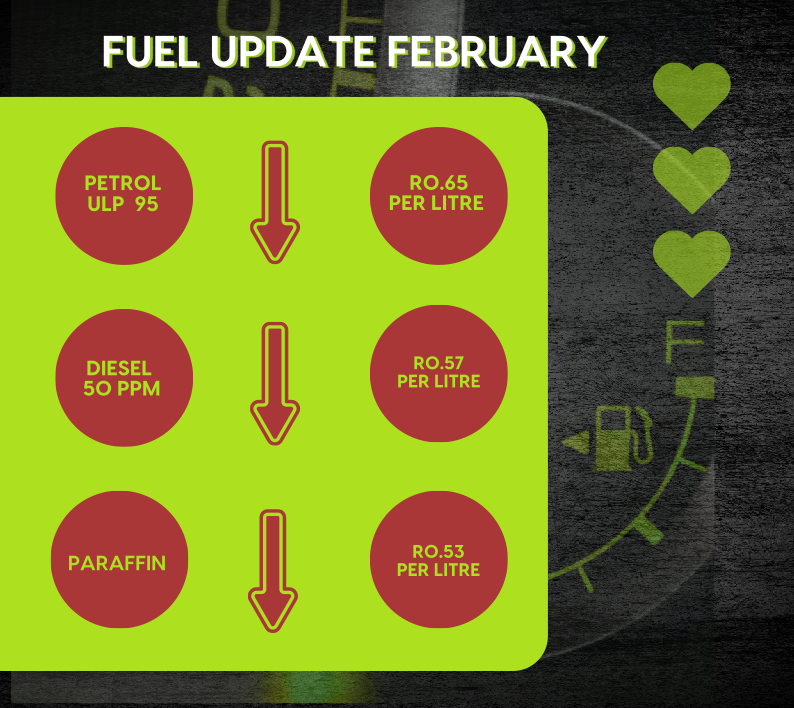
February Fuel Price Relief: A Boost for Business Confidence
February has delivered some welcome fuel price relief for South African businesses just as activity picks up after the holiday period. Driven by more favourable international pricing and a stronger rand, the decrease helps ease short-term cost pressure, even as global energy markets remain uncertain.
For fuel-dependent sectors like logistics, agriculture, construction, and manufacturing, the impact is immediate—supporting cash flow, lowering transport costs, and improving budget certainty. Businesses are encouraged to use this window to strengthen planning, improve fuel efficiency, and work closely with suppliers to maximise the benefit of current conditions.